Top 10 Electric Pump Types for Efficient Water Management?
Water management is critical in today’s world. Electric pumps play a vital role in this process. They provide an efficient way to move water in various applications. Dr. Emma Johnson, a leading expert in the electric pump industry, once stated, “The right electric pump can transform how we manage water resources.”
Many industries rely on electric pumps. Agriculture, construction, and municipal services all depend on them. Each type of electric pump serves a unique purpose. Yet, choosing the right one can be challenging. Not all pumps are efficient in every situation. Some may waste energy or fail to deliver the necessary flow rate.
Reflecting on the options available is essential. The market offers various electric pump types tailored for specific needs. This diversity can lead to confusion. Knowing the top 10 must-have electric pump types can help make informed decisions. Ultimately, effective water management hinges on selecting the best pump for your applications.

Overview of Electric Pumps in Water Management
Electric pumps play a crucial role in effective water management. They facilitate the movement of water across different terrains. Various types are available, each serving specific needs. Some pumps are designed for irrigation, while others manage stormwater. Efficient water use enhances agriculture and protects water supplies.
There are submersible pumps that work underwater. They are ideal for deep water extraction. Surface pumps, on the other hand, are common for irrigation systems. However, they may require regular maintenance. Many users neglect this, affecting efficiency.
Another option is centrifugal pumps. They are widely used in industrial settings. While powerful, they can be energy-intensive. Users often overlook their energy costs. With rising electricity prices, this could lead to significant expenses. Choosing the right pump requires careful consideration and planning. It’s a continuous learning process for many.
Top 10 Electric Pump Types for Efficient Water Management
Key Features of Efficient Electric Pumps
Electric pumps play a crucial role in water management. Understanding their key features can help in choosing the right type. First, efficiency stands out as a primary characteristic. An electric pump should move water quickly while consuming less energy. This balance saves costs and helps the environment.
Another important feature is versatility. Different applications require different pumping capacities. Some tasks need high pressure, while others need volume. An efficient electric pump should adapt to various needs. Durability is equally vital. Pumps must withstand wear and tear. Quality materials ensure longevity, but not all pumps are built the same way. Regular maintenance is necessary to prolong their lifespan.
Lastly, user-friendliness is often overlooked. Easy installation reduces downtime and labor costs. Intuitive controls simplify the operation. However, it's essential to remember that not all pumps offer clear guidance. Users may face a steep learning curve with some models. It’s a reminder to evaluate all features thoroughly before making a choice.
Top 10 Electric Pump Types and Their Applications
Electric pumps play a vital role in various water management systems. They ensure efficient water transfer in agriculture, industrial, and municipal settings. According to the Electric Pump Manufacturers Association, the global market for electric pumps is expected to reach $65 billion by 2026. This growth reflects the increasing demand for advanced water management solutions.
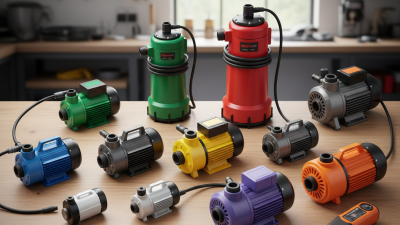
The most common types include centrifugal pumps, submersible pumps, and diaphragm pumps. Centrifugal pumps are often used for irrigation and water supply. They work well for large volumes and are relatively easy to maintain. Submersible pumps are great for deep wells, handling wastewater effectively. They operate underwater, which prevents the issue of cavitation—a common problem in other pump types. Diaphragm pumps offer accurate flow control but may require more maintenance over time.
Despite these advantages, some users encounter issues. Centrifugal pumps can lose efficiency as they age. Submersible pumps create challenges when accessing them for repairs. Diaphragm pumps can have higher initial costs. A reflection on these factors highlights the need for careful selection and proper maintenance to achieve optimal performance.
Comparative Analysis of Electric Pumps for Various Water Needs
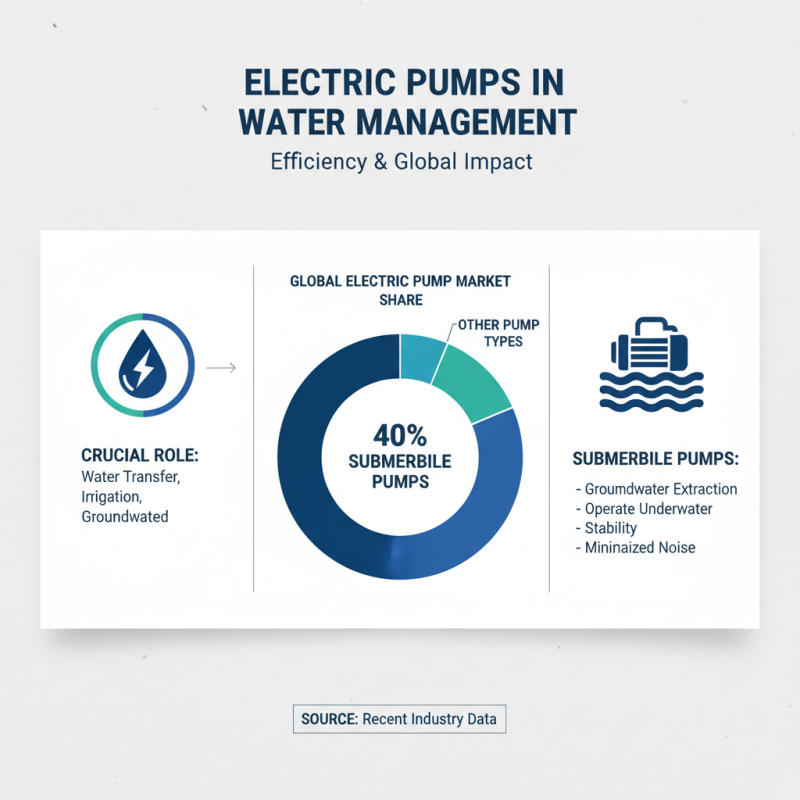
Electric pumps play a crucial role in water management across diverse applications. The right pump type can significantly enhance efficiency. According to recent data, submersible pumps account for 40% of the global electric pump market. This is due to their effectiveness in groundwater extraction. These pumps can operate underwater, providing stability and minimizing noise.
Moreover, centrifugal pumps are favored in agricultural settings, responsible for 30% of pump sales. They are ideal for irrigation, moving large volumes of water effectively. Yet, they may consume more energy compared to other types. A study indicated that switching to a more efficient model can reduce energy costs by up to 25%. However, the initial investment can be daunting for some users.
Pressure pumps, often used in residential systems, provide quick responses for various needs. They can maintain consistent pressure but may require more maintenance than expected. In some cases, users have reported issues with energy efficiency, especially with older models. It’s essential to weigh these factors when choosing the appropriate pump, ensuring it aligns with specific requirements and budget constraints.
Future Trends in Electric Pump Technology for Water Management
The future of electric pump technology in water management is bright. According to a recent industry report, the global electric pump market is projected to grow significantly, reaching $43 billion by 2025. This growth is driven by increased demand for energy-efficient water solutions. Innovative designs that minimize energy consumption are becoming the norm.
New sensor technologies enhance pump efficiency and reliability. These smart pumps can monitor performance in real-time, adjusting to changing conditions. This means less downtime and maintenance. Reportedly, these advancements can increase operational efficiency by up to 30%.
Tips: Regularly check your pump's performance. Early detection of issues saves time and money. Additionally, consider upgrades to smart technology. This can lead to significant savings.
Another trend is the integration of renewable energy sources. By using solar power or wind energy, electric pumps become even more sustainable. Reports indicate that this shift could reduce greenhouse gas emissions by over 20%.
However, the transition is not without challenges. Some systems may require extensive retrofitting, which can be costly. Not all regions have access to renewable sources either. Adaptation is essential for maximizing benefits and ensuring sustainability in water management.