For global homeowners, a failed sump pump can turn a quiet basement into a rising pool within hours. The 2026 market offers more practical protection through the water pressure backup sump pump. This system uses municipal water pressure instead of household electricity. It can continue removing water during blackouts, storms, or generator failures.
“Backup protection must be tested under real conditions, not admired in a brochure,” says Daniel Mercer, a veteran pump-system engineer with more than twenty years of field experience. His warning matters. A pump may look powerful, yet perform poorly with weak municipal pressure, narrow discharge piping, or a blocked check valve. Global buyers should compare flow rates, activation pressure, connection standards, and local water conditions. Small details matter.
Test it monthly.
This guide examines the best water pressure backup sump pump options for 2026. It considers pumping capacity, water consumption, installation demands, noise, maintenance, and long-term reliability. It also explains where each model may struggle. That part is often ignored.
A water-powered system is not automatically suitable for every property. Some homes lack stable city-water pressure. Others depend on private wells, unusual pipe fittings, or strict water-use requirements. Regional standards also differ. Buyers should verify compatibility with a qualified local plumber before installation.
The perfect choice may not exist. A dependable system is usually the one that matches your basement, plumbing, and local conditions. Performance should come before marketing claims.
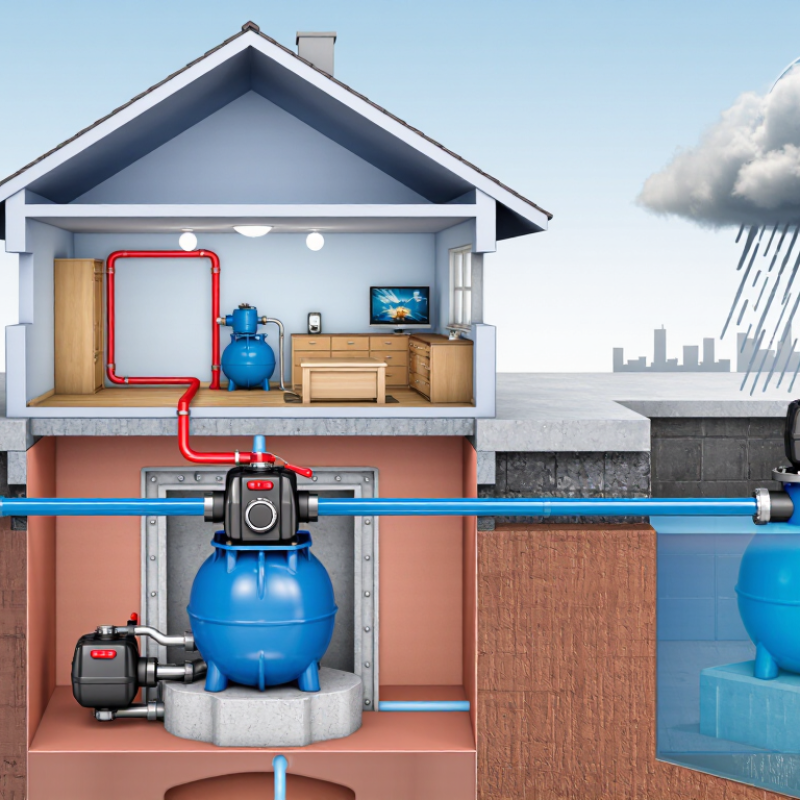
2026 Best Water Pressure Backup Sump Pumps for Global Buyers
Water-pressure backup sump pumps use municipal water to remove basement flooding when electricity fails. Their performance depends heavily on a steady 40–60 PSI water supply. This range is a working guide, not a universal guarantee. Actual output also depends on pipe size, hose length, inlet restrictions, and discharge height.
A pressure gauge should be installed near the pump inlet. Read it while nearby faucets and appliances are closed. A static reading may look acceptable, yet pressure can drop sharply during neighborhood demand. That is the part many buyers miss. At 40 PSI, a pump may deliver less water than its advertised rating. At 60 PSI, flow is usually stronger, but excessive pressure can stress fittings or older plumbing.
Check the local water standard before selecting connections. Some regions measure pressure in bar, while others use PSI. One bar equals approximately 14.5 PSI. Confirm the pump’s minimum operating pressure, required flow rate, and maximum lift. A backflow protection device may also be required by local plumbing rules. Choose corrosion-resistant fittings when water quality is uncertain. Hard water can leave scale inside narrow passages. This is easy to overlook. During installation, test the pump under realistic conditions, including a partially restricted supply valve. A backup system that works only on a perfect day needs rethinking. Keep the inlet screen clean and inspect the discharge line before each storm season.
For global buyers, 1,200–2,000 GPH at 0–10 feet of head is a practical screening range for water-pressure backup sump pumps. It is not a universal performance standard. Actual discharge depends on pipe length, elbows, check valves, and outlet elevation. A pump showing 2,000 GPH at zero head may deliver far less at ten feet.
Hydraulic Institute guidance, including ANSI/HI 14.6-2016, emphasizes testing pump performance across operating conditions rather than trusting one headline figure. That matters in a basement with a narrow discharge line and several sharp bends. A useful test record should show flow at 0, 5, and 10 feet of head. Buyers should also request the pump curve, test method, voltage, and duty-cycle limits.
Field inspections often reveal a simple problem: the backup pump is rated well, but the installation is restrictive. The U.S. Federal Emergency Management Agency identifies backup pumping as part of flood-resilience planning, yet household conditions vary widely. Battery capacity, water temperature, intake screens, and frozen discharge lines can change results. Do not assume laboratory flow equals emergency flow. Test it.
The benchmark is helpful. It is not perfect. A cautious buyer should select a model that maintains roughly 1,200 GPH at the real discharge height, not only at zero head. Performance data should be independently documented where possible. Sources: Hydraulic Institute, ANSI/HI 14.6-2016; FEMA, Homeowner’s Guide to Retrofitting.
Water-pressure backup sump pumps protect basements when electricity fails, using municipal water pressure to drive an ejector mechanism. Their key efficiency metric is the water-to-pumping ratio. A typical system consumes one to two gallons of supply water for each gallon removed. A 1:1 ratio is efficient, while 2:1 may occur with higher lifting heights or weaker pressure.
Real performance depends on inlet pressure, discharge-pipe size, check-valve condition, and vertical lift. During inspections, a pump rated at 1:1 may perform closer to 2:1 when the pit is deep or the outlet contains several bends. That difference affects water bills and emergency endurance. It also deserves honest review. Published figures often reflect controlled testing, not an older household system.
Tips: Measure supply pressure at the pump, not only at a nearby faucet. Record the water used during a timed test. Keep the discharge line short, secure, and properly sloped where local rules permit. Test the backup every few months. Watch for slow cycling, unusual noise, or rising water levels. Buyers should also confirm local plumbing requirements and available water capacity before installation. Small details matter.
2026 Best Water Pressure Backup Sump Pumps for Global Buyers
Sizing should begin with inflow, not the pump label. Measure how quickly water enters the pit during heavy rain. Record the rise in centimeters over five minutes. Then convert that volume into liters per minute. A short test is imperfect, but it is better than guessing.
Next, measure vertical lift from the pump inlet to the discharge outlet. A pump lifting water 3 meters needs more pressure than one lifting it 1 meter. Add losses from the check valve, pipe length, elbows, and narrow fittings. Use the valve manufacturer’s pressure-loss data when available. Otherwise, use a cautious estimate and keep a margin. Check the pump curve at the calculated total head, not at zero lift.
Supply pressure also matters. Water pressure may fall during power outages, peak household use, or local utility restrictions. Install a pressure gauge near the backup inlet and test it under flow. The stated capacity can look impressive. Real performance may be smaller. Select a unit that still meets the target flow at the lowest expected pressure. Test the float, alarm, discharge connection, and automatic shutoff before storm season. Recheck the system yearly, because sediment, corrosion, and a stiff check valve can quietly reduce output. This method is practical, though no calculation replaces a full-flow test in the actual sump.
| Design Scenario | Measured Sump Inflow (US gpm / L/min) |
Vertical Lift (ft / m) |
Check-Valve Loss (ft / m) |
Total Dynamic Head (ft / m) |
Hydraulic Pressure Equivalent (psi / kPa) |
Recommended Minimum Available Water Pressure (psi / kPa) |
Minimum Design Pump Flow (US gpm / L/min) |
Typical Discharge Pipe (Nominal Size) |
|---|---|---|---|---|---|---|---|---|
| Low inflow / shallow lift | 10 / 37.9 | 6 / 1.83 | 1.0 / 0.30 | 7.0 / 2.13 | 3.0 / 20.9 | 13.0 / 89.6 | 12 / 45.4 | 1½ in / DN40 |
| Residential inflow / standard lift | 15 / 56.8 | 10 / 3.05 | 1.5 / 0.46 | 11.5 / 3.51 | 5.0 / 34.3 | 15.0 / 103.4 | 18 / 68.1 | 1½ in / DN40 |
| Moderate inflow / medium lift | 20 / 75.7 | 12 / 3.66 | 2.0 / 0.61 | 14.0 / 4.27 | 6.1 / 41.8 | 16.1 / 111.0 | 24 / 90.8 | 1½ in / DN40 |
| High inflow / medium lift | 30 / 113.6 | 15 / 4.57 | 3.0 / 0.91 | 18.0 / 5.49 | 7.8 / 53.7 | 17.8 / 122.7 | 36 / 136.3 | 2 in / DN50 |
| Very high inflow / high lift | 40 / 151.4 | 20 / 6.10 | 4.0 / 1.22 | 24.0 / 7.32 | 10.4 / 71.6 | 20.4 / 140.6 | 48 / 181.7 | 2 in / DN50 |
| Extreme inflow / high lift | 50 / 189.3 | 25 / 7.62 | 5.0 / 1.52 | 30.0 / 9.14 | 13.0 / 89.6 | 23.0 / 158.6 | 60 / 227.1 | 2 in / DN50 |
| Calculation basis: Total Dynamic Head = Vertical Lift + Check-Valve Loss. Hydraulic pressure equivalent is calculated using 0.433 psi per foot of water head. The recommended minimum available water pressure adds a 10 psi operating margin; actual water-powered pump performance must be confirmed against the selected pump curve and local supply conditions. | ||||||||
For global buyers, a water-pressure backup sump pump must match the local plumbing system, not just the advertised flow rate. NPT and BSP threads differ in pitch, angle, and sealing method. They are not automatically interchangeable. Check the connection drawing, thread size, and whether the fitting is tapered or parallel. A small mismatch can cause leakage behind a finished wall. Test-fit adapters before installation.
Municipal water pressure also changes performance. Ask for flow data at several inlet pressures, such as 40, 60, and 80 psi. Confirm the required discharge height and pipe diameter. A pump that performs well in a showroom may deliver less water during a neighborhood outage or peak demand. Include a compliant backflow prevention arrangement where required. This protects the drinking-water network. Details matter here.
Frequency is easy to misunderstand. A water-powered pump uses water pressure, but an electric alarm, sensor, or auxiliary pump may require 50 or 60 Hz. Verify voltage, frequency, plug format, and motor rating separately. For components touching potable water, request current NSF/ANSI 61 verification and confirm its exact scope. A general factory certificate may not cover every seal, valve, or adapter. I would also record serial numbers and installation photos. Paperwork can be incomplete, and that is worth checking before purchase.