China Top Battery Sump Pump Manufacturers and Suppliers

China has become a significant sourcing base for battery sump pump equipment, serving residential, commercial, and industrial drainage needs. Reliable manufacturers combine practical engineering with controlled production. They understand that a pump may operate in a dark pit, during heavy rain, or after a sudden power failure.

A dependable battery sump pump should provide more than emergency backup. Buyers should examine battery capacity, discharge head, flow performance, alarm systems, charging time, and enclosure protection. Chinese suppliers may offer lithium or lead-acid battery options, automatic controls, float switches, and customized cable lengths. Clear specifications matter. So does field experience.

Strong manufacturers usually support product testing, sample evaluation, quality inspection, and after-sales communication. Factory audits can reveal assembly standards, testing equipment, and traceability procedures. Certifications should be checked against the target market, not accepted without verification. Honest suppliers also explain limitations, such as reduced runtime under high discharge pressure or battery aging in extreme temperatures.

Some claims need closer review. A higher flow rate does not always mean better basement protection. Poorly matched piping can reduce real performance. Buyers should compare test conditions carefully. This guide introduces China’s leading battery sump pump manufacturers and suppliers through product capability, manufacturing experience, customization options, quality control, and service reliability. It also encourages practical questions before ordering, including replacement battery availability, warranty coverage, spare parts support, and delivery consistency. Details often decide whether backup protection works when the main power fails. Small oversights can become expensive.

China Top Battery Sump Pump Manufacturers and Suppliers

What Are Battery Sump Pumps and How Do They Work?

China Top Battery Sump Pump Manufacturers and Suppliers

What Are Battery Sump Pumps and How Do They Work?

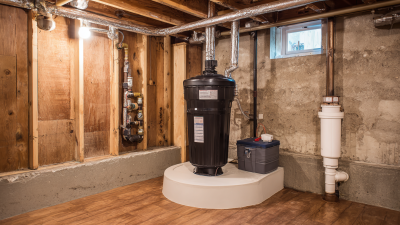
A battery sump pump is a backup drainage system for basements, crawl spaces, and utility rooms. It starts when the primary pump stops or water rises beyond a set level. A sealed lead-acid or lithium battery powers a direct-current motor. The motor turns an impeller, moving water through a discharge pipe and check valve.

The control unit usually includes a charger, alarm, float switch, and battery monitor. During normal conditions, the charger maintains the battery. When electricity fails, the float switch activates the pump automatically. A 12-volt, 100-ampere-hour battery stores about 1,200 watt-hours theoretically. Pump efficiency, discharge height, cable loss, and battery age reduce usable runtime.

Outages are not rare. The U.S. Energy Information Administration reported average customer interruption times of about 5.5 hours in 2022, excluding major events. Including major events, the figure reached about 9.6 hours. This explains why backup capacity matters, but published runtime claims need careful checking.

A lower discharge pipe usually improves flow.

Real performance depends on head pressure, pipe diameter, water temperature, and switching frequency. Installers should test the float switch, alarm, charger, and battery terminals regularly. A neglected battery can fail quietly. I have also seen systems sized correctly on paper, yet weakened by an undersized discharge line. Manufacturers and suppliers should provide measured flow data, battery specifications, test conditions, and replacement guidance. Clear evidence builds trust better than impressive runtime promises.

Key Types of Battery Sump Pumps Made in China

China’s battery sump pump sector covers several practical designs for basements, crawl spaces, and small utility pits. The main type is the primary DC sump pump, powered by a 12-volt or 24-volt battery. It starts during power failures and usually uses a float switch for automatic activation. Combination systems add a battery backup pump beside a mains-powered pump. They suit homes facing heavy rain or frequent voltage interruptions.

Compact portable pumps form another important category. Their smaller housings fit narrow pits, while reinforced thermoplastic bodies resist moisture and light impact. Some Chinese manufacturers also produce smart backup units with battery indicators, audible alarms, and remote monitoring. According to the International Energy Agency’s Batteries and Secure Energy Transitions report, global battery storage additions reached about 42 GW in 2023, increasing roughly 130% year on year. This wider battery trend supports better cells, controllers, and charging systems for drainage equipment. However, sump pump performance still depends heavily on battery quality and installation.

Tips: Match the pump’s flow rate with pit depth and discharge-pipe length. A high rating can fall sharply through a long or narrow pipe. Check runtime under load, not only the advertised standby figure. Lead-acid batteries remain affordable, while lithium options reduce weight and charging time. The choice is not always obvious. The 2024 Fortune Business Insights report valued the global water pump market at USD 66.21 billion in 2023, but battery sump pumps remain a smaller, less consistently reported segment. Buyers should request test curves, alarm specifications, and documented cycle testing before purchase.

Key Types of Battery Sump Pumps Made in China

Battery sump pump systems commonly use 12V or 24V DC configurations. The chart compares estimated operating time for typical deep-cycle battery capacities when powering a 300W DC backup pump. Estimates use 80% usable battery capacity and the formula: runtime = voltage × amp-hours × 80% ÷ power consumption. Actual runtime varies with pump efficiency, water head, battery condition, and discharge rate.

Why Choose Chinese Sump Pump Manufacturers and Suppliers?

Why Choose Chinese Sump Pump Manufacturers and Suppliers?

Chinese sump pump manufacturers offer practical advantages beyond competitive pricing. The International Energy Agency’s Global EV Outlook 2024 reports that China held about 80% of global battery cell manufacturing capacity in 2023. This mature supply chain supports faster access to lithium cells, battery management systems, chargers, and protective housings. For sump pump buyers, that can mean shorter development cycles and more flexible battery options.

Factory visits often reveal the real difference. Reliable suppliers can show pump curve tests, battery-cycle records, waterproofing checks, and incoming material inspections. They can also adjust float switches, discharge fittings, alarm systems, and backup runtimes for different basements. The price is not everything. A cheaper quote may hide weaker cells or limited after-sales support. I have seen specifications look impressive, yet the wiring layout felt difficult to service. That detail deserves more attention.

Tips:

Request a complete test report, not only a product brochure. Confirm runtime at the pump’s rated head, not under empty-load conditions. Ask how many battery cycles the system has completed. Check whether replacement batteries, seals, and controllers remain available. Suppliers should explain their quality process clearly. If they avoid technical questions, reconsider the purchase. A small pilot order can expose packaging damage, charging faults, and inconsistent assembly before a larger commitment.

How to Evaluate China’s Top Battery Sump Pump Companies

Evaluating China’s top battery sump pump companies requires more than comparing catalog prices. Check factory experience, engineering staff, and documented production controls. A credible supplier should provide pump curves, battery specifications, test procedures, and traceable serial records. Request samples from separate production batches. One perfect sample proves little.

The IEA’s Global EV Outlook 2024 reports that lithium-ion battery pack prices fell 14% in 2023. This trend may reduce battery costs, but it does not guarantee longer backup runtime. Ask suppliers to state runtime at a defined head height, water flow, and battery age. Test the unit during simulated power failures. Record startup delay, noise, current draw, and alarm performance. IEC 60335-2-41 is also a useful safety reference for household pump equipment, although compliance claims need independent verification.

Reliability depends on the complete system. Examine float-switch design, charger protection, corrosion resistance, and replacement-battery availability. Review factory quality records, failure-rate data, and corrective-action reports. ISO 9001 certification can support process confidence, but it cannot replace product testing. I would also inspect packaging after a vibration test, because damaged connectors can cause silent failure. This method is not perfect. Field conditions vary, and reported data may be selective. Still, transparent evidence usually separates an experienced manufacturer from a low-cost assembler.

China Top Battery Sump Pump Manufacturers and Suppliers - How to Evaluate China’s Top Battery Sump Pump Companies
Evaluation Dimension Key Specification or Evidence Practical Benchmark for Shortlisting Recommended Verification Method Why It Matters
Pump Type Submersible backup sump pump designed for temporary or emergency operation. The product should be clearly identified as a battery-powered backup pump and should include installation and operating instructions. Review the technical datasheet, product label, instruction manual, and intended-use statement. Correct classification helps prevent the selection of a product that is unsuitable for basement drainage or emergency backup service.
Rated Flow Capacity Water output stated in gallons per hour, gallons per minute, or litres per minute. Compare flow at the actual discharge head rather than relying only on the maximum flow at zero head. Request a performance curve or conduct a controlled flow test at several discharge heights. Flow decreases as the vertical lift and piping resistance increase, so zero-head figures may overstate real performance.
Maximum Discharge Head Maximum vertical height at which the pump can move water. The stated head should exceed the installation height with additional allowance for pipe friction and fittings. Measure the proposed discharge route and compare it with the pump curve, including hose or pipe diameter. An inadequate head rating can cause low drainage capacity or complete failure to discharge water.
Battery Compatibility Required battery chemistry, nominal voltage, capacity range, and terminal or connector type. The supplier should specify compatible deep-cycle battery requirements and provide clear polarity and connection instructions. Check the manual, wiring diagram, battery recommendations, charger requirements, and reverse-polarity protection. Battery compatibility directly affects operating time, safety, charging performance, and service life.
Operating Runtime Estimated operating time under a stated load and battery condition. Runtime claims should identify battery capacity, water head, duty cycle, and pump load; unsupported runtime claims should be treated cautiously. Use the approximate relationship: Runtime ≈ usable battery energy ÷ pump power, then confirm through a load test. Actual runtime depends on pump current, battery condition, discharge depth, water level, and cycling frequency.
Automatic Activation Float switch, electronic water-level sensor, or other automatic start mechanism. The pump should start and stop consistently at the specified water levels without sticking or excessive cycling. Perform repeated fill-and-drain tests and inspect switch movement, cable routing, and obstruction clearance. Reliable automatic activation is essential when the property is unattended during heavy rain or power outages.
Primary Power-Outage Function Automatic transfer from mains-powered equipment or standby mode to battery operation, where applicable. The backup system should activate promptly after simulated power loss and return safely to standby after power is restored. Conduct repeated mains-disconnection and restoration tests under water load. A backup pump is valuable only if it operates when the primary drainage system or household power is unavailable.
Alarm and Status Indication Audible alarm, visual indicator, battery-low warning, pump-running signal, or fault notification. Critical alarms should be clearly distinguishable and remain functional during a low-battery or pump-fault condition. Test low-voltage, disconnected-sensor, blocked-outlet, and high-water conditions where supported. Alarms provide early warning before water damage becomes severe.
Construction Materials Materials used for the housing, impeller, shaft, seals, switch, and discharge connection. Components exposed to water should resist corrosion and remain compatible with the intended temperature and water conditions. Review the bill of materials, component drawings, material declarations, and sample construction. Material quality affects durability, blockage resistance, corrosion performance, and maintenance requirements.
Solid-Handling Capability Maximum particle size or debris tolerance stated by the supplier. The rated passage should match the expected sump-pit conditions, and the intake should include suitable screening where necessary. Inspect the intake design and test the pump with representative particles under controlled conditions. Debris can restrict the intake, damage the impeller, or prevent the float switch from operating correctly.
Electrical Safety Protection against short circuits, overload, reverse polarity, over-discharge, and exposed conductive parts. The product should include appropriate fusing or circuit protection and clearly documented electrical limits. Review wiring diagrams, protection ratings, test reports, insulation details, and charger specifications. Battery systems can deliver high fault current, making correct protection important for fire and equipment safety.
Water Ingress Protection Protection level of the pump, controller, connectors, and battery enclosure. Wet-area components should have a suitable ingress-protection design for their installation location. Check the stated IP rating where available and inspect seals, cable glands, connectors, and enclosure design. Water ingress can cause corrosion, electrical faults, false alarms, and premature failure.
Noise and Vibration Operating sound, vibration behavior, mounting stability, and risk of pipe resonance. The pump should operate without excessive vibration, rattling, or movement at the specified operating point. Run the pump at representative head and inspect mounting, discharge piping, and vibration transfer. Lower vibration improves comfort, reduces mechanical stress, and helps protect pipe connections.
Installation Compatibility Discharge outlet size, check-valve arrangement, sump-pit dimensions, cable length, and mounting method. The supplier should provide dimensional drawings and connection details before ordering. Compare the product drawing with the existing sump pit, discharge pipe, battery location, and available space. Many installation problems arise from incompatible outlet sizes, insufficient clearance, or unsuitable discharge routing.
Quality Management Documented inspection procedures, production controls, traceability, and corrective-action processes. A capable supplier should provide batch records, inspection checkpoints, and consistent product identification. Request quality-manual extracts, inspection plans, sample inspection reports, and production traceability records. Documented controls reduce variation between production batches and improve accountability.
Testing and Reliability Routine functional testing, endurance testing, leak checks, electrical tests, and switch-cycle testing. Testing should cover both the pump assembly and the complete battery backup system under realistic operating conditions. Request test procedures, acceptance criteria, sample results, and an independent pre-shipment inspection when appropriate. Testing evidence is more useful than general claims about reliability or manufacturing experience.
Compliance Documentation Applicable electrical, safety, electromagnetic-compatibility, battery, and shipping documentation for the destination market. Documents should match the exact model, voltage configuration, charger, and production version being supplied. Verify certificates, declarations, laboratory reports, model numbers, report dates, and issuing laboratories. Correct documentation supports legal importation, safe installation, and customer acceptance.
Customization Capability Available options for voltage, connectors, controller settings, labels, packaging, manuals, and discharge fittings. Any customization should be supported by revised drawings, samples, and written change-control records. Confirm minimum order quantity, tooling charges, sample approval process, and production-change controls. Controlled customization can improve market fit without creating untracked variations in safety-critical components.
Supply Capacity Production capacity, lead time, component availability, packaging capability, and export experience. Capacity claims should be supported by a realistic production schedule and documented component sourcing plan. Review lead-time history, production planning information, factory capacity evidence, and shipment records. Reliable supply reduces stockouts and helps maintain consistent delivery during seasonal demand.
Warranty and After-Sales Support Warranty duration, excluded conditions, spare-parts availability, troubleshooting support, and response time. The supplier should provide written warranty terms and a defined process for defective-product analysis and replacement. Review the warranty document, spare-parts list, service contact process, and sample troubleshooting instructions. Clear after-sales support reduces downtime and the total cost of ownership.
Total Cost of Ownership Unit price plus battery, charger, shipping, installation, maintenance, replacement parts, and expected service life. Compare complete system cost rather than pump-only pricing, and evaluate performance and warranty together with price. Prepare a landed-cost comparison using the same battery capacity, discharge setup, testing requirements, and order volume. The lowest purchase price may not be the lowest-cost solution when runtime, reliability, and support are included.

Ordering, Quality Control, and After-Sales Service Factors

China Top Battery Sump Pump Manufacturers and Suppliers

Ordering, Quality Control, and After-Sales Service Factors

Ordering a battery sump pump requires more than checking price and delivery time. Confirm the required flow rate, lifting height, battery voltage, discharge size, and pit dimensions. Ask for a written specification sheet. Details matter. A sample may perform well, yet the production model can differ without clear batch controls.

Reliable suppliers should explain their quality inspection process. Request test records for flow, head height, float-switch response, insulation, leakage, and motor temperature. A practical factory visit can reveal how pumps are assembled, labeled, and packed. Test it wet. Dry demonstrations often hide problems. Inspectors should also compare incoming components with approved samples and retain batch records. No inspection plan is perfect, especially when testing is rushed.

After-sales service deserves equal attention before payment. Confirm warranty coverage, response time, replacement-part availability, and troubleshooting procedures. Ask whether the supplier can provide videos, wiring diagrams, and remote technical support. Keep spare switches, seals, and connectors for urgent repairs. That gap matters. Some suppliers promise fast assistance but lack English documentation or trained technicians. I would include service terms in the purchase contract, although even detailed paperwork cannot replace honest communication and consistent follow-up.